
Transmission Intervention Amsterdam: Day Three

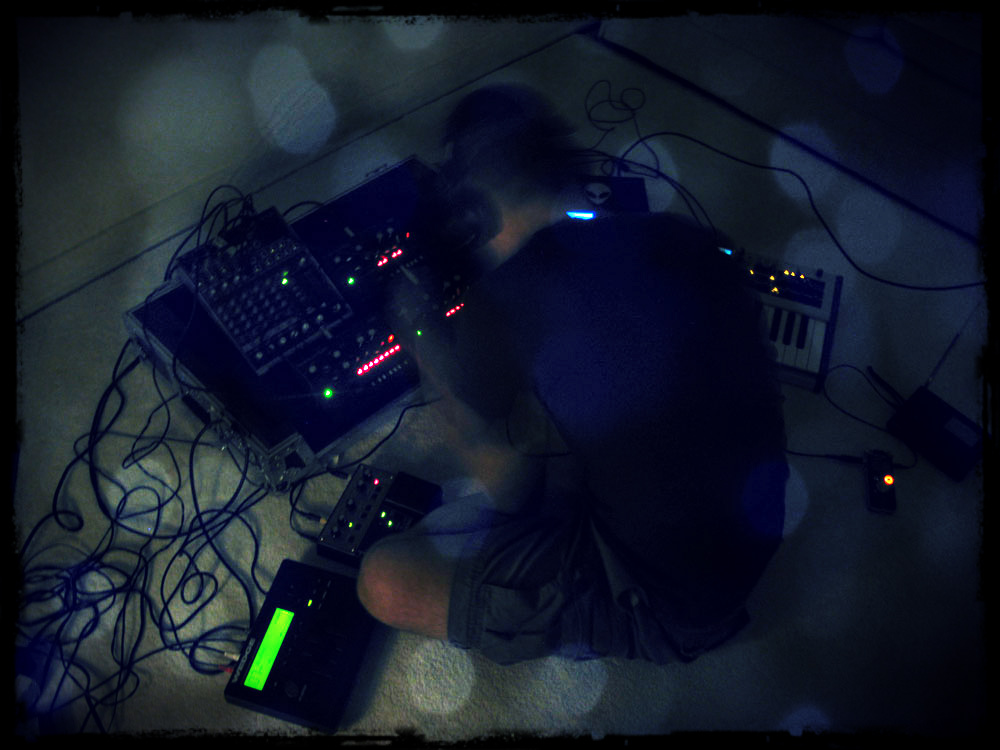
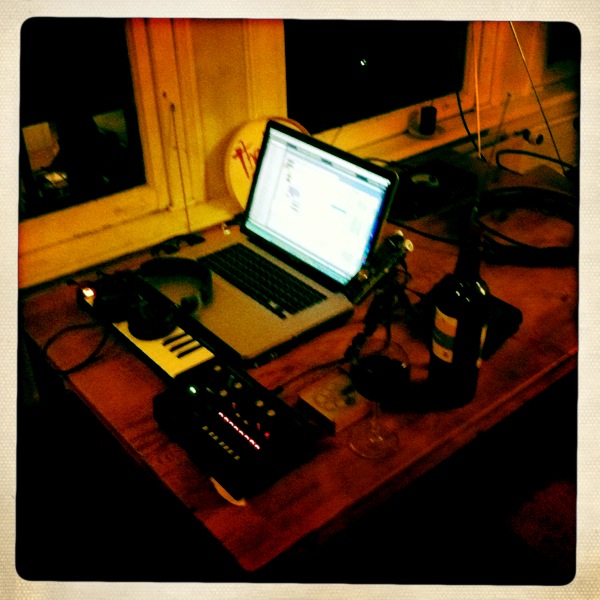
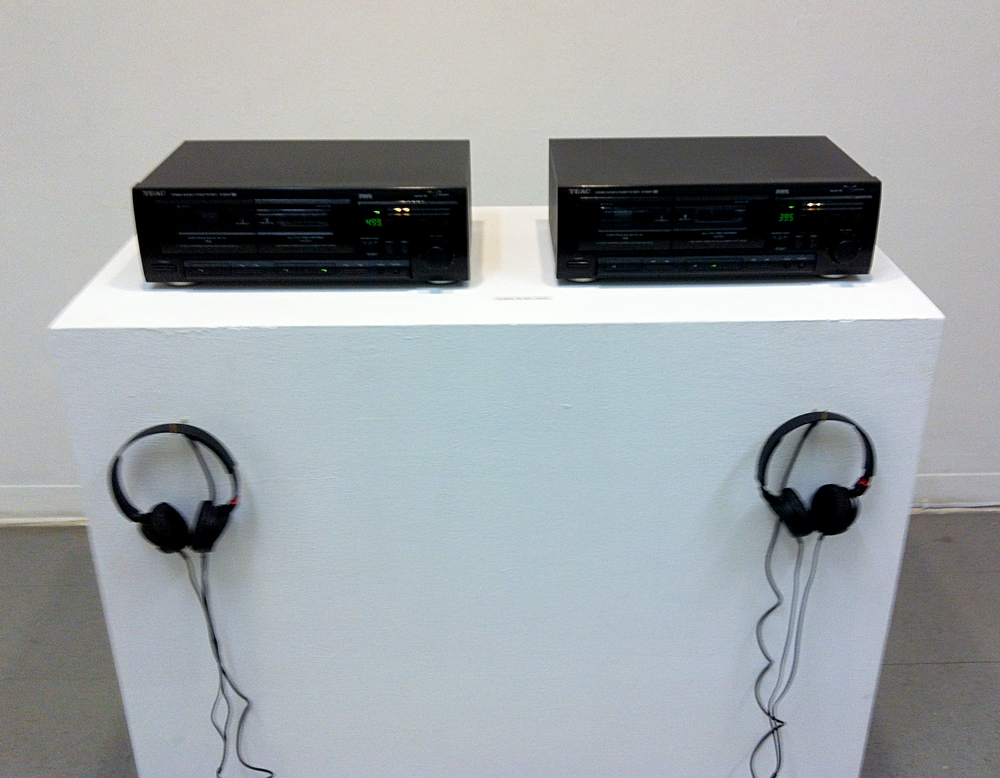
Last month while during a 10 day residency at STEIM [STudio for Electro Instrumental Music] I created a body of improvised sound works of varying duration. These concerts were performed live during the day and night on the FM band throughout the city. Because the documentation was recorded directly from the receiver, any static or interference captured, although not necessarily planned, was intentional and became part of the final documented work. More clips will be posted in the near future. Below is a a full concert as heard live on 97.1MHz FM the evening of March 14, 2012.

Broadcast live on 97.1MHz FM Amsterdam.
I. Rembrandtplein
II. Utrechtsestraat Shining
III. Black Light (for Peter Christopherson)

Rembrandtplein_Utrechtsestraat_Shining_Black_Light.mp3

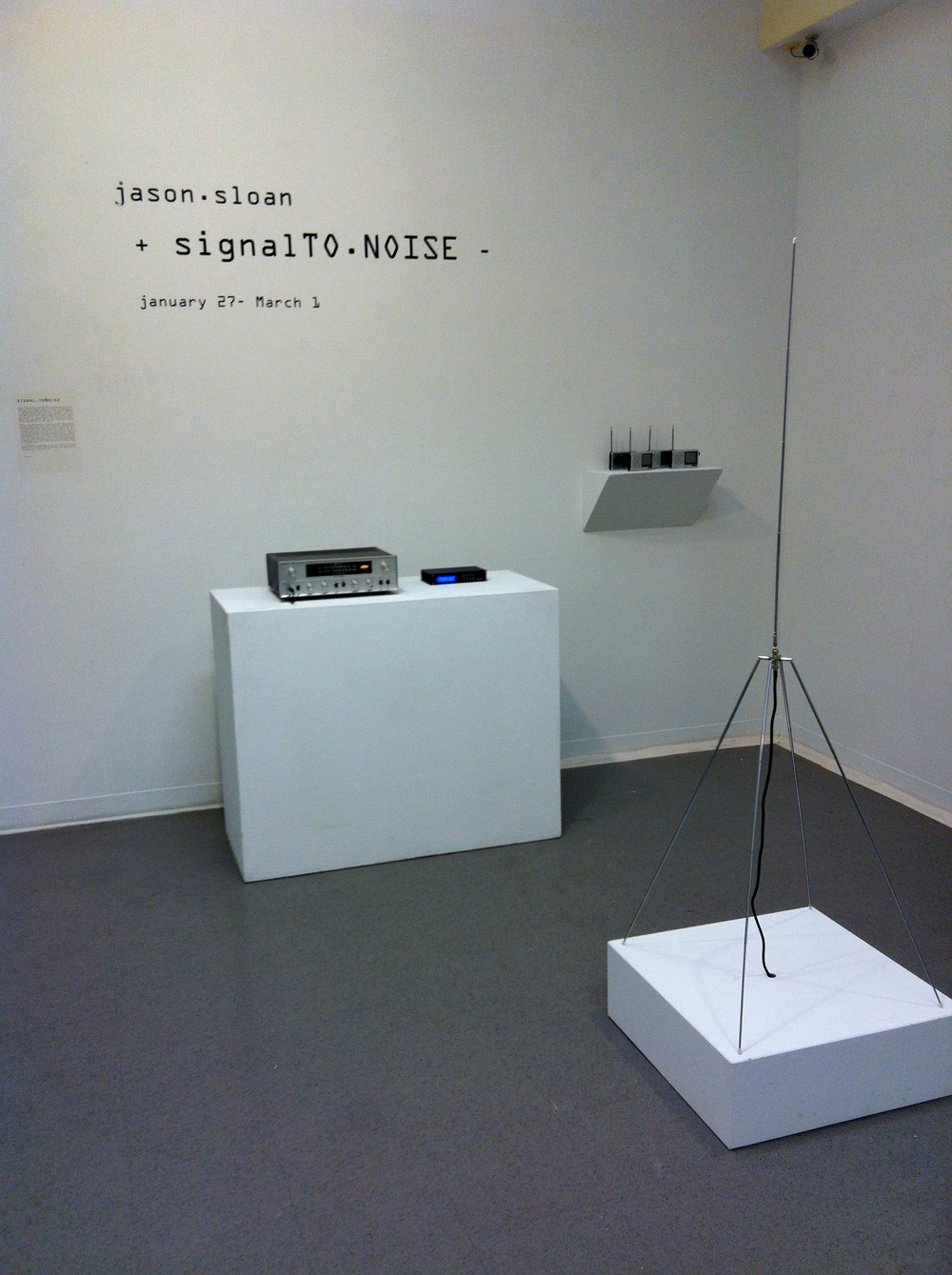
Signal To Noise: January 27 – March 1, 2012

About signal.toNoise:

I first became interested in minimalism as an undergraduate while studying painting. I recall reading Sol LeWitt’s “Sentences on Conceptual Art” and being taken by his statement: “Successful art changes our understanding of the conventions by altering our perceptions.” This radically changed how I viewed many minimalist works moving forward. Monochromatic pieces like Rauschenberg’s white canvases, which influenced John Cage’s 4’33”, took on a whole new meaning for me. It became apparent that environment, lighting, sound and smell, etc. could alter the viewers perception of an artwork. Over the years, the essence of these ideas have always resonated with me. Whether in my performance work, videos, net.works, sound or music, the idea of challenging perception has always been key.

Recently, I’ve been thinking a lot about the general understanding of noise. Most people would consider it a distrubance to an otherwise desired experience. Static during a weak radio or television transmission or a child crying during a church sermon could be seen as anomalies that “ruin” the expected outcome of an otherwise desired event. Over the years we’ve attempted to purify these experiences with technologies that attempt to filter the noise from our lives. Dolby Laboratories, during the heyday of cassettes tapes, developed a noise reduction system that was built into most stereo compontents. This filter emphasized the audible frequency range and diminished tape hiss, an artifact of the recording process similar to white noise. Wet cleaning vinyl records became a popular method for audiophiles to reduce the crackle and pops from LP playback. And more recently, digital or internet radio has all but eliminated weak signal noise or static common with old antenna tuners.

In a system similar to composting, the works in the Signal To Noise series recycle a particular medium’s inherent, undesirable sonic traits (cassettes hiss, radio static, digital music compression etc.) and presents them for consideration as the final work of art.


signal.toNoise Series:

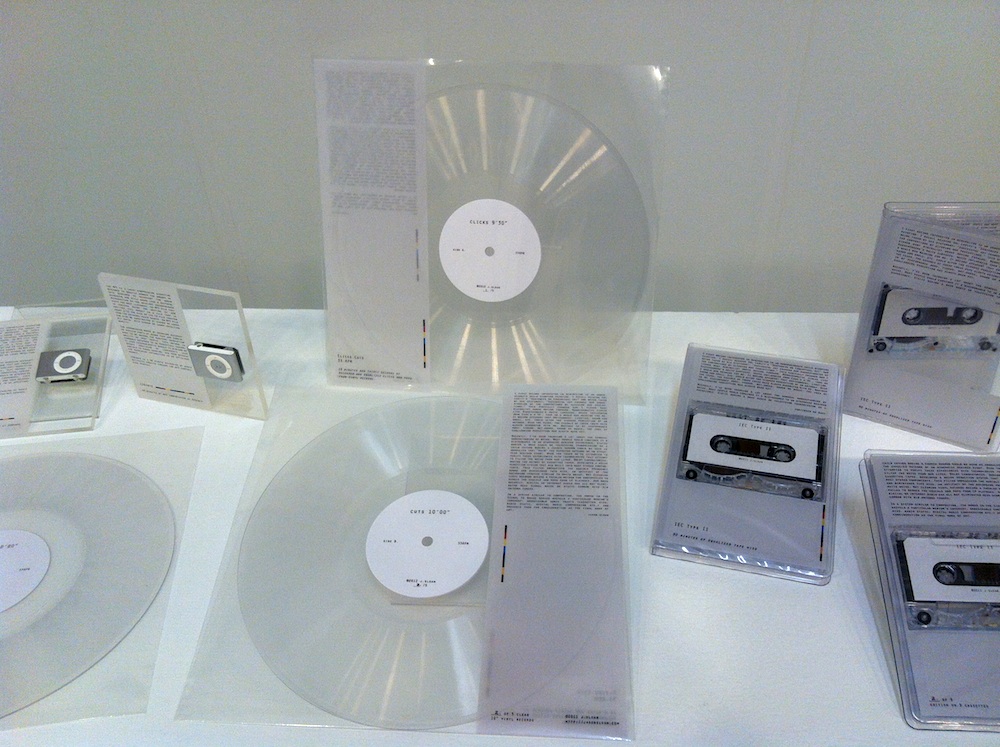
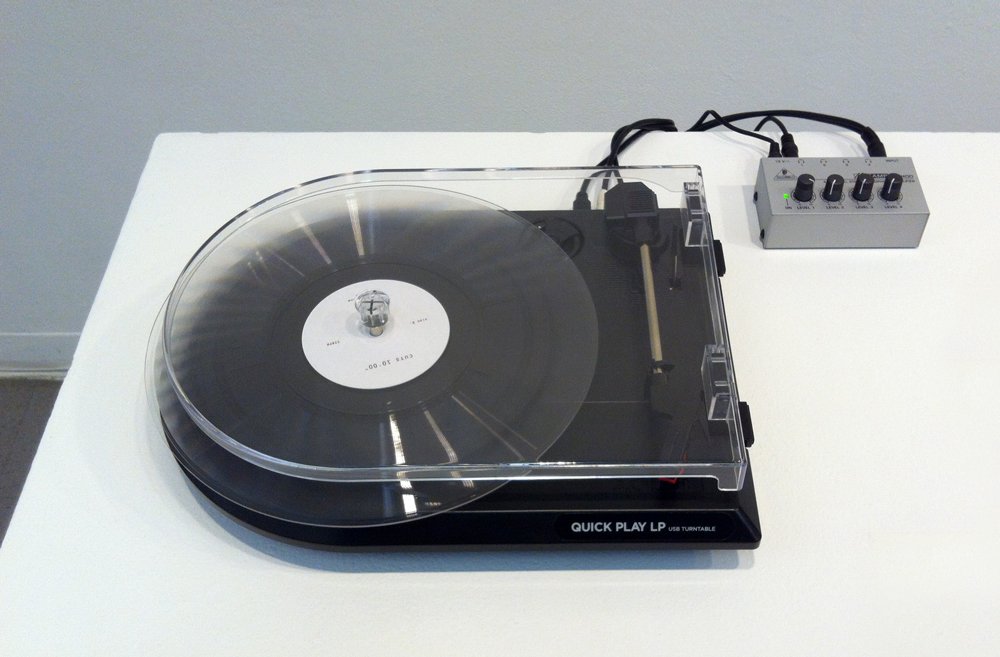
Clicks and Cuts:
20 minutes of equalized record clicks and pops pressed back onto 10″ clear vinyl records.
Edition of 5 albums.

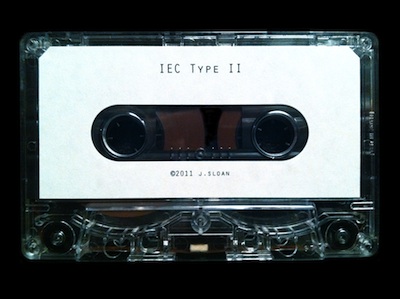
IEC Type II:
C-90 Type II. cassette tape
.
45 minutes of equalized tape hiss per side.
Edition of 9 cassettes.

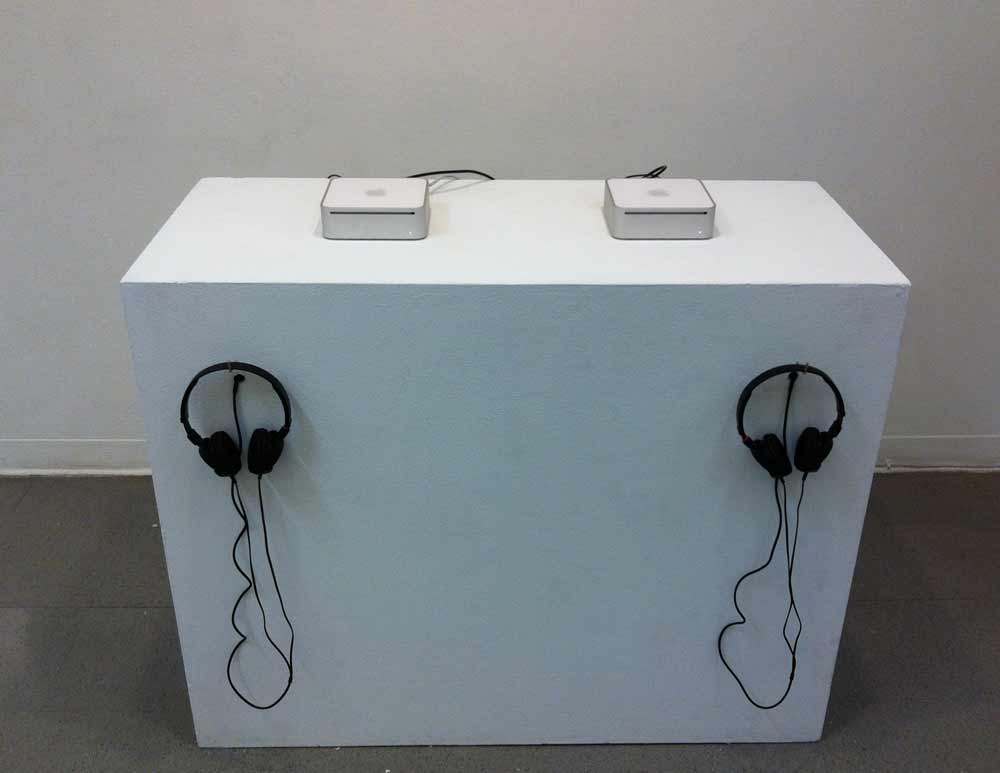
128kbps:
40 minutes of isolated mp3 compression.
Edition of 4 iPods containing the mp3 file.
Presented on Apple mini’s for the exhibition.

whiteOut:
FM broadcast.
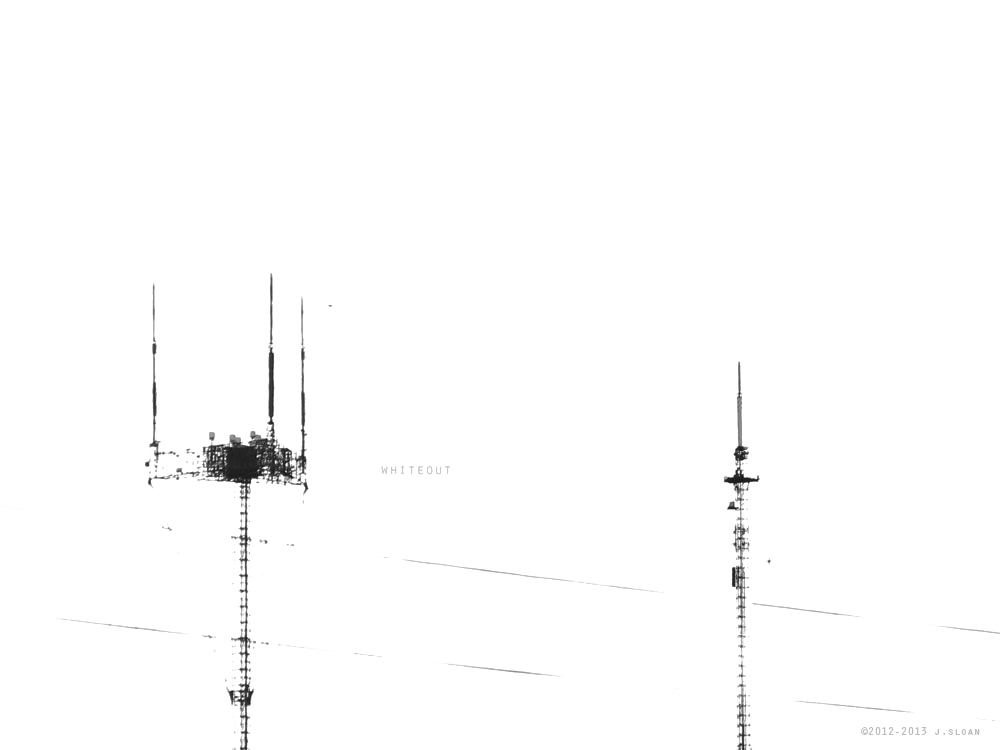
Live FM tuner static being rebroadcast in full stereo on 93.5 MHz FM over an approximate
distance of 4-5 miles.

The_Signal.mp3
– jason.sloan discussing the signalTo.noise series on Baltimore’s NPR affiliate WYPR. Original air date 1/27/12 -1/28/12

– Review of Signal To Noise at Disquiet

The signal.toNoise exhibition will be on view Friday, Jan. 27 through Sunday, March 11 at the Maryland Institute College of Art. Pinkard Gallery (1401 W. Mount Royal Ave.). A reception will be held on Friday, Jan. 27, 5-7 p.m.

papalCorruption v1.0 beta


papalCorruption v1.0 is a recent experiment for a larger body of new video based works exploring the glitch and corrupt data in media culture. The original clip was a short Italian television story about Pope Benedict XVI.  I downloaded the video from the Vatican website and then corrupted it on a data level.

zip.disk [musik]

Today I was experimenting with some old zip drives I discovered inside a box in my studio. Rather than getting rid of them I wanted to see if I could use the drive as a  industrial/data instrument.

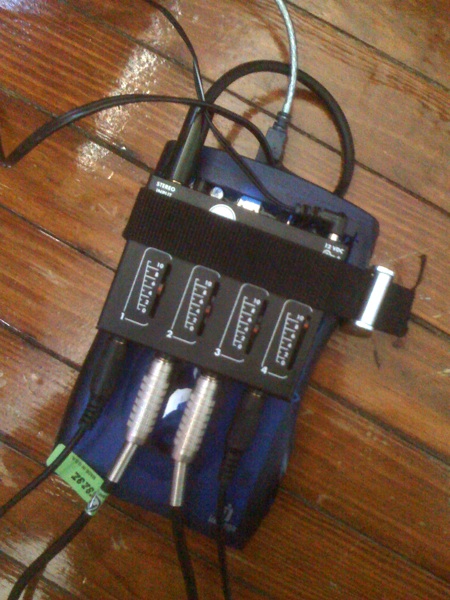
The resulting experiment was beyond anything I was expecting. By simply soldering two piezo elements to the head of the drive and boosting the signal with a four channel preamp [which also allows for multiple line outs] the drive, when engaged, sounded rather amazing. I connected it to the computer, inserted a disc then waited for it to mount. I soon noticed that opening various file types directly from the discs would result in a variety of sonic output. Video files for example would create a slightly different texture than a static .jpg file. Media files also allowed the drive to be engaged for a longer period of time as the information was being transcribed.

I sent the audio output from the zip drive to a loop pedal to allow layering and then recorded the experiment/performance. What resulted was a slowly building, dark ambient/industrial soundscape  composed entirely in the moment from three different zip discs and a loop pedal.

Raw recording 7m.36s
[sc_embed_player_template1 fileurl=”https://www.jasonsloan.com/audio/ZIP_DEMO.mp3″]

Over the next few weeks I’m excited to begin experimenting with both 5¼-inch and 3½-inch floppy drives. Who knows, there may even be a release in the future of just “disc.MUSIC.” Maybe I could call it “Funeral Hymns for Dead Technology.” Okay… maybe not.

north avenue: noise + vibrating.AIR documentation

Jason Sloan & Steve Bradley

North Avenue: NOISE + vibrating.AIR was an installation and live performance created for the MEGAPOLIS AUDIO FESTIVAL in Baltimore on May 14-16. Below is a slightly modified text taken from the press release.

“Bradley’s North Avenue: NOISE, a sound art installation, used the windows of the Windup Space gallery as a large tympanum that picked up the vibrations, via multiple contact mics, from the street and transmitted the audio through a series of multiple FM transmitters and receivers. Each low powered mini radio station rebroadcasts the signal to the next transmitter at 4 different frequencies over the FM dial. The final transmission is remixed into the original sound from the street windows creating a slightly off synch or “double image.” Periodically, beat frequencies will emerge from the broadcast air depending on the amplitude from the streets. The final transmission saturated the airwaves on the corner of North Avenue and Charles Street, Baltimore, Maryland, with a sonic checkerboard pattern. Sound artist Jason Sloan built a live streaming web interface for the North Avenue: NOISE installation that allowed a global audience to experience the work live regardless of their geography.

On Saturday May 15th, Bradley and Sloan employed a variety of RF receivers, radios, scanners, and the live web stream from the North Avenue: Noise installation to produce a 30 minute multi-textural carpet of undulating radio-phonic sound. Through the various layers emerged radio transmissions of live and fragmented voices, glitches and hisses from the Baltimore city streets and airwaves. “

All the sounds used to create the vibrating.AIR composition were extracted live from the airwaves and processed or edited on the fly. For example, the rhythm that emerges around the 10 minute mark of the piece was created from scanner radio static. One of my favorite moments was locking into someone’s home baby monitor who’s dialogue became the underlying narrative for the work. I also incorporated a live NOAA transmission towards the end of the performance which acted as a unique geotag and time stamp for the work.

Steve and I plan on releasing a hi-resolution audio and specially packaged limited edition CD documenting the North Avenue: NOISE + vibrating.AIR project in the near future. The CD will include interviews, various excerpts from the North Avenue: Noise web stream, plus a stereo and surround mix of the vibrating.AIR performance.  More information will be made available soon.

vibrating.AIR performance. May 15, 2010.
vibratingAIR.mp3

Jason.Sloan and Steve Bradley discuss North Avenue: NOISE + vibrating.AIR on Maryland Morning.
Maryland_Morning.mp3

MUSICfor.one [byTEN] documentation

MUSICfor.one [byTEN]MUSICfor.one [byTEN] was a live “concert” improvisation created for the Chatroulette social network. Audio in the performance was generated from screen grabs taken of the first 10 people that appeared during a previous visit to the website. These pictures in turn became the graphic notation that loosely scores the work. Through this process I become the conductor while the anonymous Chatroulette users become the unaware orchestra. Below is documentation of the performance in two parts from the March 20th performance. The first movement resulted in a composition that was more “symphonic” than I had expected while the second movement was more textural.

In the virtual “wild west” of Chatroulette, there are few if any governing rules.  Knowing this it still came as a surprise that  I was “flagged and banned” from interacting for 10 minutes during Movement 2. Apparently, someone deemed what I was doing “inappropriate” behavior.

movement.1

movement.2

[http://chatroulette.com]